Flood Restoration, Brisbane & Gold Coast
The immediate, structured response to water damage — flood restoration Brisbane and flood restoration Gold Coast, including emergency extraction, structural drying, contamination assessment, mould prevention and permanent reinstatement, with insurer coordination from the first call.
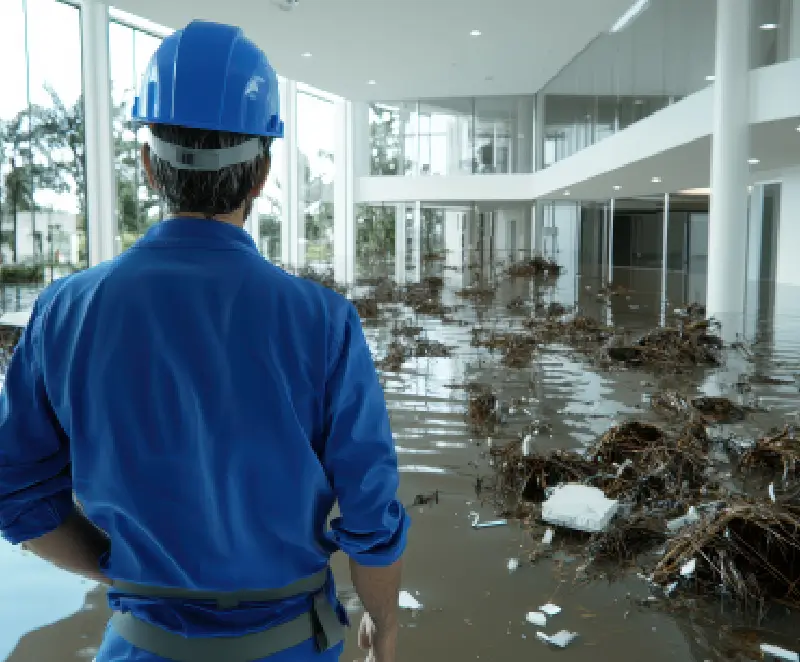
Water rising, or floodwater already through the building?
Our crews mobilise within hours across Brisbane, Ipswich, Logan and the Gold Coast. The faster we start, the less secondary damage you face.
One of Australia’s Most Flood-Affected Regions
South East Queensland is one of Australia’s most flood-affected regions. Suburbs along the Brisbane River corridor — Rocklea, Oxley, Chelmer, Graceville, Yeronga and Hawthorne — as well as low-lying areas in Ipswich and Logan, experience periodic inundation that can affect thousands of homes in a single event.
Many older post-war and Queenslander-style homes in these areas have timber subfloor structures, hardwood flooring and fibrous plaster walls that are particularly vulnerable to water intrusion and slow-drying conditions. Equally, the Gold Coast’s high-rise and canal-front properties face saltwater intrusion, stormwater ingress and rising water table events.
Innovare Remedial has operated across SEQ flood events and understands the specific challenges of Queensland building stock in flood conditions — delivering trusted flood restoration Brisbane and flood restoration Gold Coast services, from Category 1–3 water classification to the drying of concealed cavities.
Our Flood Restoration Process
Emergency response & make-safe
We mobilise within hours. First priority is safety — isolating electrical services, assessing structural integrity and establishing safe access — before extraction begins.
Water extraction
Standing water is removed with truck-mounted and portable units, from ground slabs and subfloor cavities to basements, lift pits and waterlogged wall cavities.
Structural drying
Commercial dehumidifiers, air movers and heat drying are calibrated to material moisture readings and monitored over multiple days with pin and non-invasive meters until equilibrium is reached.
Contamination assessment
Floodwater is often contaminated with sewage and biological matter. We classify the water category per IICRC S500 and apply appropriate antimicrobial protocols.
Mould prevention
Mould can develop within 24–48 hours. After drying we apply mould-inhibiting treatments and transition to full remediation where growth has already begun.
Strip-out & rebuild
Non-salvageable materials are removed under a documented scope, then reinstatement is carried out to NCC/BCA standards with full photographic record.
Insurance coordination
We liaise directly with your insurer throughout — scope-of-works, photo evidence, moisture monitoring logs and completion reports in the format insurers require.
Dried, decontaminated and documented
Flood restoration timelines depend on the extent of inundation, water category, building type and speed of response. We do not proceed to reinstatement until materials reach acceptable moisture content.
- IICRC S500 water damage classification (Category 1–3)
- Continuous moisture monitoring with documented logs
- Antimicrobial treatment of contaminated surfaces
- Mould-inhibiting intervention within the critical 24–48 hour window
- NCC/BCA-compliant reinstatement with full photographic record
- Insurer-ready scope-of-works and completion reporting
Indicative flood restoration timelines
| Stage | Typical timeframe |
|---|---|
| Emergency make-safe & extraction | Hours – 1–2 days |
| Structural drying (standard residential) | 3–10 days |
| Strip-out of non-salvageable materials | 2–5 days |
| Full reinstatement | 2 weeks – several months |
Common Questions
Switch off electricity at the switchboard if it is safe to do so, do not walk through floodwater indoors (contamination risk), and call us immediately on 0488 773 232. We will mobilise an emergency crew and guide you through the immediate steps.
Most home and contents policies include flood cover, though definitions vary. We review your policy details with you and prepare documentation aligned with your insurer’s requirements. We have worked with all major Australian insurers operating in SEQ. See our Insurance Repair Works page.
Drying timelines depend on saturation, building materials and ambient conditions. We use moisture meters throughout and do not proceed to reinstatement until materials reach acceptable moisture content — typically 3–10 days for standard residential works.
Yes. Mould can establish within 24–48 hours in warm, humid conditions. Even after visible drying, residual moisture in wall cavities, subfloors and insulation can sustain growth for weeks. Our drying protocols and post-drying inspections specifically address this risk. See Mould Remediation.
You may also need
Facing water damage right now?
Every hour counts. Call our 24/7 emergency line or request a consultation to get a documented, insurer-ready response underway.